


PPC
Google Ads Cost in Australia: How Pricing Really Works
Google Ads cost is set by your own budget and the price of each click, decided in an auction. What drives Google advertising cost in Australia and how to budget.
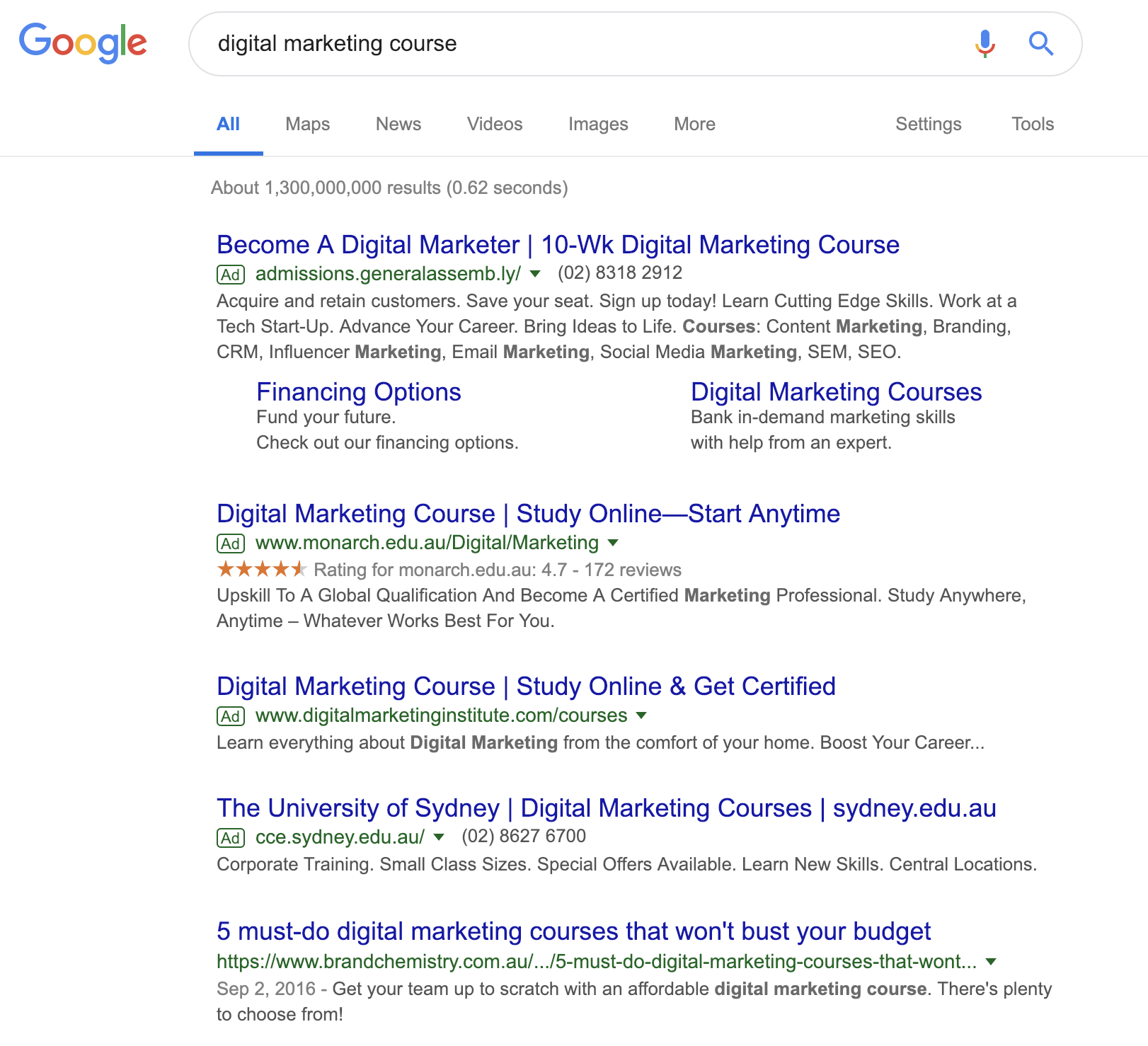
An older Google results page: the top results are ads. Google now labels them “Sponsored”.
SEO vs PPC is a choice between earning clicks and paying for them. PPC (pay-per-click ads, such as Google Ads) can put you at the top of Google this week, and it stops the day you stop paying. SEO (search engine optimisation) builds rankings over months that keep bringing visitors without a cost per click. Most businesses do best with both.
Both get your business in front of people searching on Google. The difference is how you get there and what you pay for.
| SEO (organic search) | PPC (Google Ads) | |
|---|---|---|
| What you pay for | The work: content, technical fixes, links | Each click, plus the work to manage the ads |
| How fast it works | Usually months | As soon as the ads are approved |
| When you stop paying | Rankings fade slowly | Ads stop straight away |
| Where you appear | The organic results and the map listings | The ad spots, labelled “Sponsored” |
| Control over wording and timing | Partial: Google chooses what to show | Full: you write the ads and set the hours |
| Best for | Long-term, steady enquiries | Fast leads, launches, offers and testing |
So the PPC vs SEO question is really about time and budget: how quickly you need enquiries, and whether you’d rather pay per click or invest in rankings you keep.
Ads and organic results are ranked by separate systems.
That’s why SEO work focuses on your website and reputation, while PPC work focuses on keywords, bids, ad copy and landing pages.
No. Google AdWords (renamed Google Ads in 2018) is paid advertising, and SEO is the work that helps your pages rank in the free results. When people search “Google AdWords vs SEO” they’re asking the same question as this article: paid clicks or organic rankings. Running ads doesn’t lift your organic rankings, and good rankings don’t lower your ad costs directly.
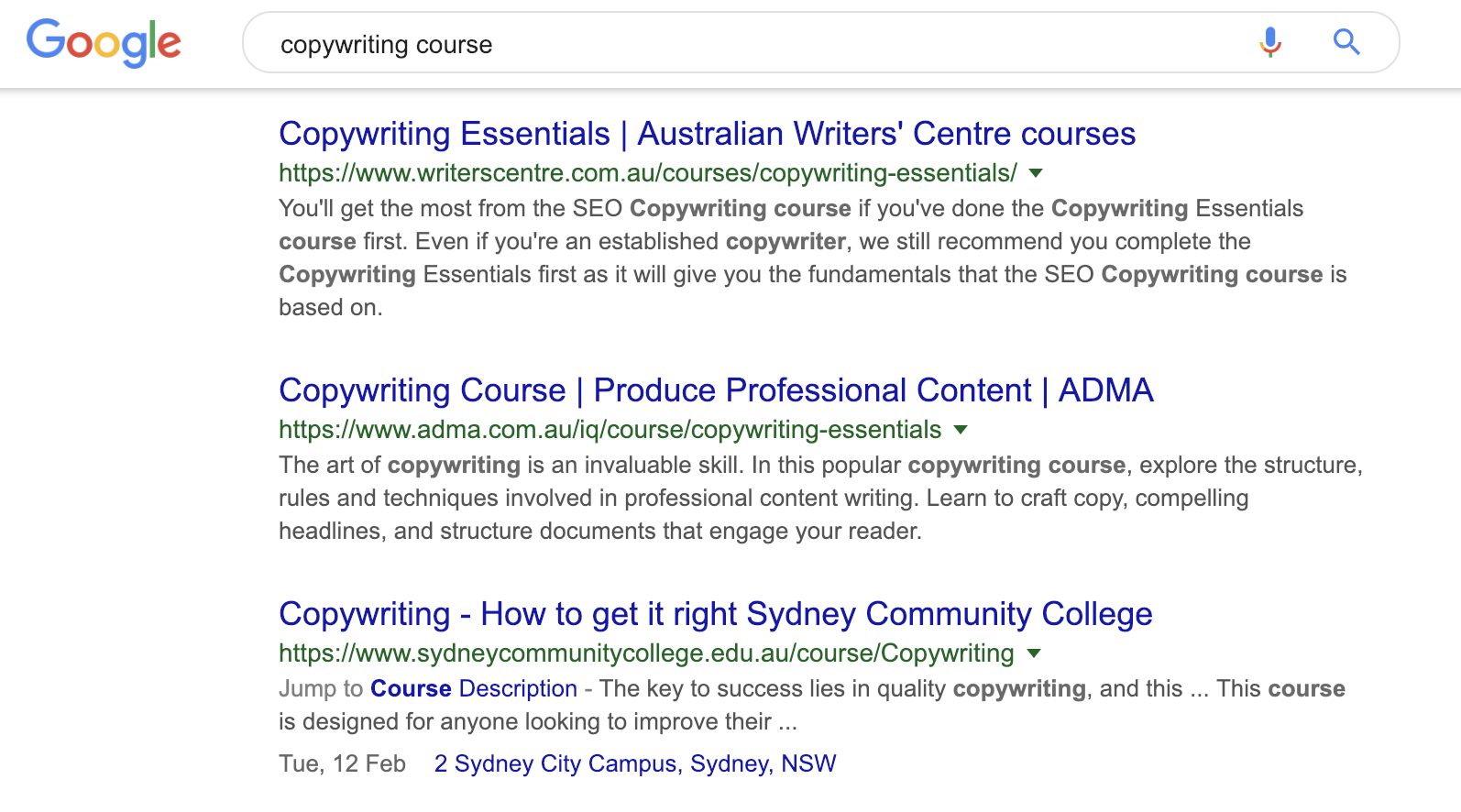
Neither is better for every business. Here’s how we’d answer “SEO vs Google Ads, which is better?” for different situations:
SEO is also an ongoing job rather than a one-off, so it rewards patience.
For a local business, the Google Ads vs SEO for local business choice often starts with your Google Business Profile, because the map listings are organic and free. A complete profile with reviews and photos can win calls before you spend anything on ads. Our Google Business Profile optimisation covers that.
Smaller towns also mean fewer searches. In a regional centre like Mildura, a few well-chosen keywords may not need a big ad budget, and you can target the ads to the area you serve so you don’t pay for clicks from people too far away to visit.
Usually, yes. Online stores tend to use both:
Used together, SEO and Google Ads make each other better:
Measure both in one place, so you’re comparing enquiries rather than clicks. Our GA4 guide shows how to mark enquiries as key events. When Google Ads and SEO report into the same analytics, the budget conversation gets much easier.
If you’re comparing SEO vs PPC in Australia, remember that PPC has two costs and SEO has one:
When a business asks us which to start with, we look at four things before we recommend either:
The answer is often a short burst of ads while the SEO work starts, then a smaller ad budget once rankings build. Sometimes it’s neither, because the website needs work first.
Over a long period, SEO often costs less per enquiry, because you don’t pay for each click. In the short term, PPC is usually quicker to return enquiries. The real comparison is cost per enquiry over a year, not the monthly fee.
Google Ads can bring clicks as soon as the ads are approved, while SEO usually takes months to show steady results. How long depends on your website, your competition and your area. We report progress every month, so you can see it building.
No. Google says advertising doesn’t affect organic rankings, and nobody can pay to rank higher there. Ads can still help your SEO indirectly, because their data shows which searches bring enquiries and which headlines get clicked.
Not straight away. Test it: lower the budget on searches where you rank near the top and watch your total enquiries. If they hold, keep the saving. If they drop, the ads were winning customers your organic listing wasn’t.
PPC buys you visibility now; SEO builds visibility you keep. For most businesses, the answer to SEO vs PPC is both: ads for speed and SEO for the long run, measured by enquiries rather than clicks.
If you’d like a straight answer for your business, book a free 30-minute discovery call. If the right first step is fixing your website rather than either channel, we’ll say so.
A marketing team that has helped businesses across Sunraysia and the Mallee since 2017, from our office on Deakin Avenue in Mildura.
Keep reading
Google Ads cost is set by your own budget and the price of each click, decided in an auction. What drives Google advertising cost in Australia and how to budget.
How to find and apply for small business grants in Australia, what they can pay for, and when marketing can be part of a funded project.
Sales funnel stages explained for small businesses: a worked example, how to build a funnel, the metrics to track and where most leads are lost.

Let’s start by scheduling a free discovery call so we can get to know each other and see if we’re a good fit for your marketing needs.